An AI PC refers to a new category of personal computers that are designed with built in artificial intelligence capabilities, allowing them to process data, learn from user behavior, and perform tasks more intelligently than traditional systems. These devices combine hardware and software innovations to deliver smarter performance, enhanced efficiency, and more personalized user experiences.
What an AI PC Actually Does
An AI PC is designed to handle artificial intelligence tasks directly on the device, rather than relying entirely on cloud-based processing, which improves speed, privacy, and efficiency. These systems are equipped with specialized components such as neural processing units that enable them to perform complex calculations required for AI applications.
For example, an AI PC can enhance video calls by improving background noise reduction, automatically adjusting lighting, and even tracking facial movements to keep the user centered on screen. It can also assist with productivity tasks by predicting user actions, organizing files intelligently, and offering real time suggestions based on usage patterns. This ability to process AI workloads locally allows for faster responses and reduces dependence on internet connectivity, making these devices more reliable in various scenarios.
AI PCs: Powering the Next Generation of Intelligent Computing
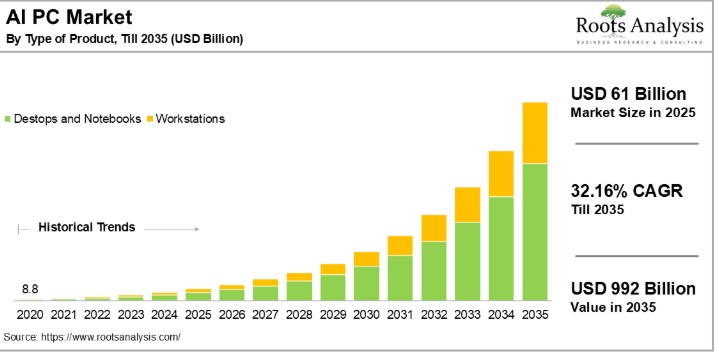
I came across this market while exploring how artificial intelligence is moving beyond cloud systems and becoming a core part of everyday devices, and it quickly became clear that personal computing is entering a new phase. While reviewing industry insights, I came across a report by Roots Analysis, which estimates that the global AI PC market is expected to grow from USD 41 billion in 2024 to USD 61 billion in 2025 and further reach USD 992 billion by 2035, representing a CAGR of 32.16% during the forecast period.
This rapid growth highlights how quickly AI capabilities are being integrated directly into personal computing devices, driven by demand for faster on-device processing, enhanced productivity features, and reduced dependence on cloud infrastructure.
How AI PCs Work Behind the Scenes
AI PCs work by integrating specialized hardware with software frameworks that are optimized for artificial intelligence operations. The key component is often the neural processing unit, which is designed to handle machine learning tasks efficiently without overloading the central processor.
These systems collect and analyze data from user interactions, allowing them to adapt and improve over time based on individual preferences and behavior. Machine learning models embedded within the system enable features such as voice recognition, image processing, and predictive assistance to function seamlessly. The combination of local processing and intelligent software creates a system that can respond quickly and accurately to user needs, enhancing both performance and user experience.
Real World Applications That Show Their Value
AI PCs are being used in a variety of real-world applications, demonstrating their potential to improve productivity, creativity, and everyday computing tasks. In professional environments, these devices help streamline workflows by automating repetitive tasks and providing intelligent recommendations that save time.
In creative fields, AI PCs assist with tasks such as video editing, graphic design, and content creation by offering tools that enhance efficiency and output quality. They can also improve collaboration by enabling smarter communication tools that adapt to user behavior and preferences. For everyday users, AI PCs provide a more personalized computing experience by learning habits and adjusting system behavior to match individual needs, making interactions more intuitive and efficient.
Key Features That Define an AI PC
AI PCs include several features that set them apart from traditional personal computers, making them more capable and user friendly. One of the most important features is on device AI processing, which allows tasks to be completed quickly without relying on external servers.
Another key feature is adaptive performance, as these systems can adjust their operations based on user behavior and workload requirements, ensuring optimal efficiency. Enhanced security is also a significant advantage, as local processing reduces the need to send sensitive data to external servers.
These devices often include advanced capabilities such as real-time language translation, intelligent search, and personalized assistance, all of which contribute to a more seamless computing experience.
Limitations and Challenges to Consider
Despite their advantages, AI PCs also come with certain challenges that need to be considered before widespread adoption. One of the primary concerns is cost, as these systems often include advanced hardware that can make them more expensive than traditional computers.
There are also challenges related to software compatibility, as not all applications are currently optimized to take full advantage of AI capabilities. Additionally, users may need time to adapt to new features and understand how to use them effectively. Another consideration is energy consumption, as performing complex AI tasks locally can require significant power, which may impact battery life in portable devices.
The Future of AI PCs
The future of AI PCs looks promising as advancements in artificial intelligence, hardware design, and software integration continue to drive innovation. These systems are expected to become more powerful, more efficient, and more accessible to a wider range of users.
As AI becomes a standard feature in personal computing, AI PCs will play a central role in shaping how people interact with technology, making devices more intuitive and capable. The continued growth of this market suggests that AI driven computing will become an essential part of everyday life.
Final Thoughts
AI PCs represent a significant shift in personal computing, offering systems that are not only powerful but also intelligent and adaptive. Their ability to process AI tasks locally and provide personalized experiences makes them a key part of the future of technology.
Understanding how AI PCs work and the value they provide helps explain why they are gaining attention across industries and user groups. High quality content that explains these concepts clearly and accurately aligns with principles that emphasize usefulness, effort, and trust, ensuring that users gain meaningful insights from the information they consume.